GERÇEK HAYAT MAGAZINE – 18 APRIL 2016
Did you personally carry out the design and construction of the Maryland Diyanet Center Külliye (complex) project from the very beginning? Could you tell us a little about the construction phase?
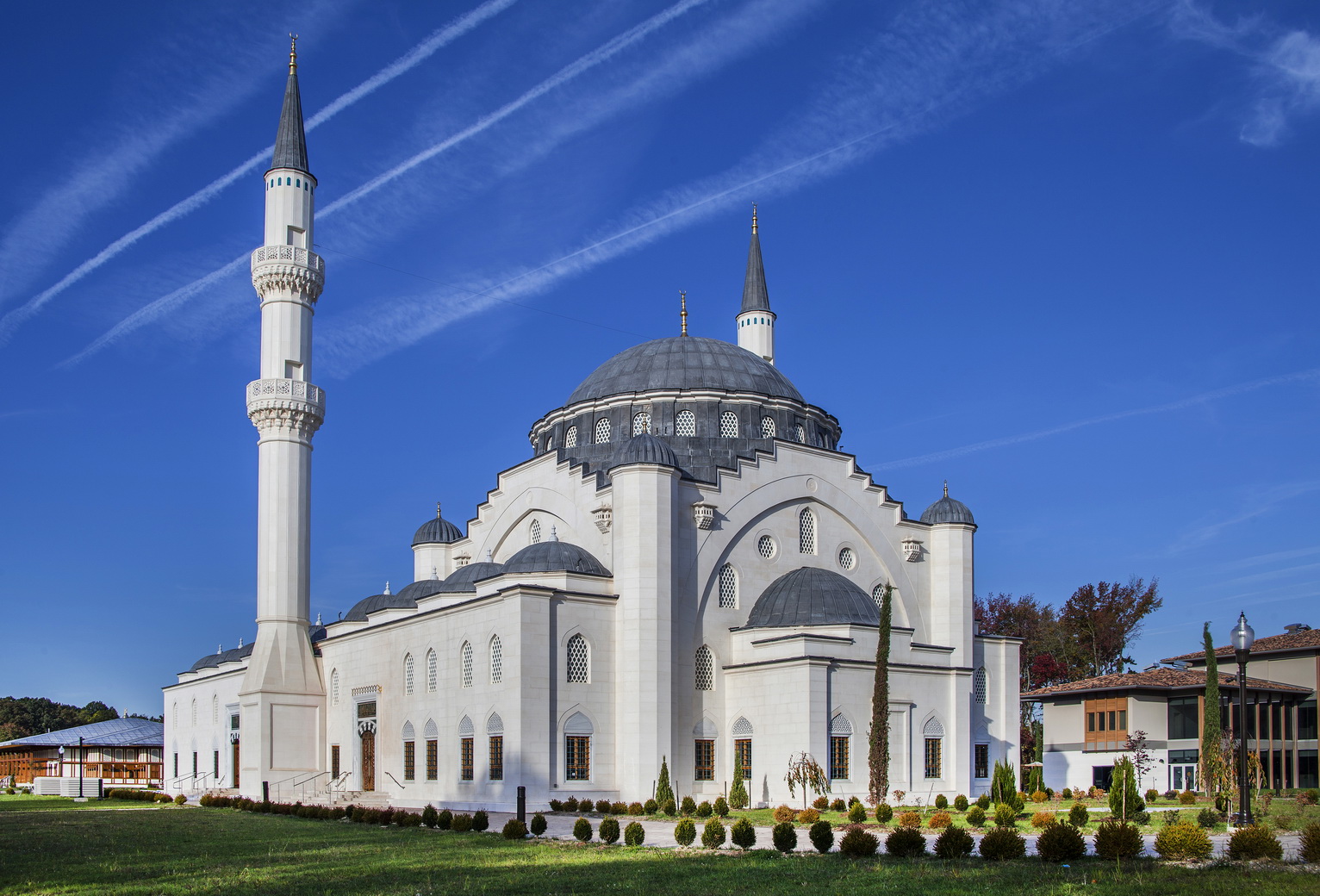
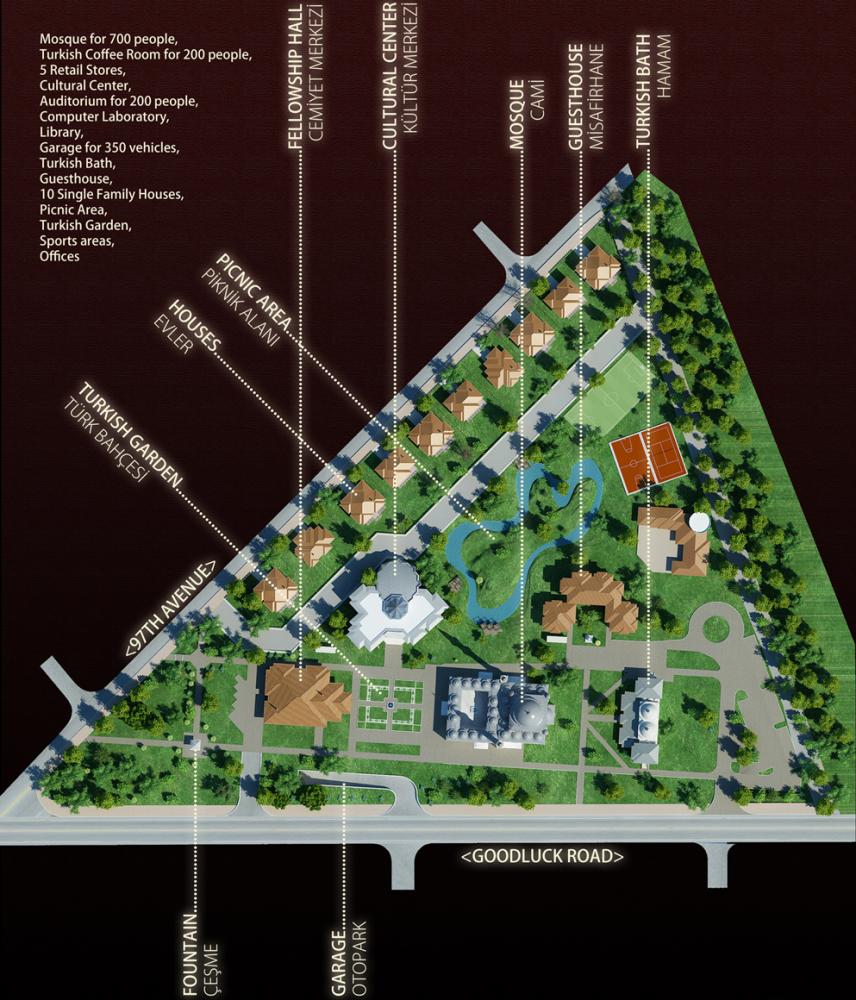
This 60-decare (approximately 15-acre) site, 25 minutes from Washington D.C., was purchased in 1993 at the initiative of the late Dr. Abdülbâki Keskin, Counsellor for Religious and Social Services at the Washington D.C. embassy. In 2008, upon the instructions and guidance of Prime Minister Recep Tayyip Erdoğan, it was decided to bring to life a center project where cultural, artistic and religious events could be organized, which would better reflect Turkish society and its ancient tradition of wisdom in America, and which would bring joy to people's hearts. The foundation of the center was laid in May 2013 with the participation of Prime Minister Recep Tayyip Erdoğan.
The construction of the center was carried out under the supervision of Diyanet Counsellor Dr. Yaşar Çolak. The project design was done by myself, and the implementation project and project consultancy were carried out by our firm Hassa Architecture under the direction and management of our technical coordinator, Architect Mustafa İskender. The rough construction and the mechanical and electrical installation works were carried out by Balfour Beatty and AD&C Management Co. The materials and fabrications for the finishing works, such as stone, marble, wood and tile, were brought from Turkey, and their fabrication and installation were carried out by the Turkish artisans and master craftsmen with whom we have worked for 30-35 years. The calligraphic works were written by Calligrapher Hüseyin Kutlu, and the painted ornamentation (nakış) was done by Ornamental Painter Semih İrteş.
How does it feel to be the architect of this külliye?
Islamic civilization is the civilization of a religion which, from the Constitution of Medina onwards, from the prophethood of our Prophet until the collapse of the Ottomans, adopted multiculturalism as its guiding principle and applied it with justice. However, after the collapse of the Ottomans, the unity of Muslims was broken because of conflicting interests, and the balance in the Middle East disappeared. I believe this külliye is very important in terms of representing this civilization within America's multiculturalism. This project is a very important opportunity to take up our deep-rooted civilization, shaped over centuries, as a whole and to represent it correctly with its original identity and direction.
What were the greatest difficulties you encountered while carrying out this project?
The greatest difficulty was the problems encountered in adapting the construction details, which we personally drew and designed, to the American code system. Leaving aside their adaptation to the American code system, our details, through which we were trying to reflect an ancient architectural understanding, could not be grasped by the American architects and engineers there and were distorted every time, which forced us to expend quite exhausting effort to protect the details. Owing to the comprehensive scope of the külliye, the large number of buildings and the hundreds of details of these buildings, each detail turning into a problem, was the greatest difficulty we faced in the project. On this occasion, we experienced how barren and monotonous American architectural and construction practice is. In addition, we were obliged to tolerate within the architecture a great deal of unnecessary mechanical and electrical installation that stemmed from the system and that we did not consider necessary.
Are there architects in America who come to examine the project and want to benefit from it? Would the külliye be a good example?
First of all, the first great appreciation came from the firms that carried out the rough construction of the project, because we are certain that, until the project was completed, they themselves never imagined that an architecture of such impact and beauty would emerge. They expressed their amazement and appreciation with words of praise. Each of these firms now mentions this project first in its own promotional materials.
Even before the project was completed, many visitors coming from various parts of America and even Canada wished there were such a center where they live, and they still hold on to this wish.
In your view, was the külliye a need in America, or a show of strength?
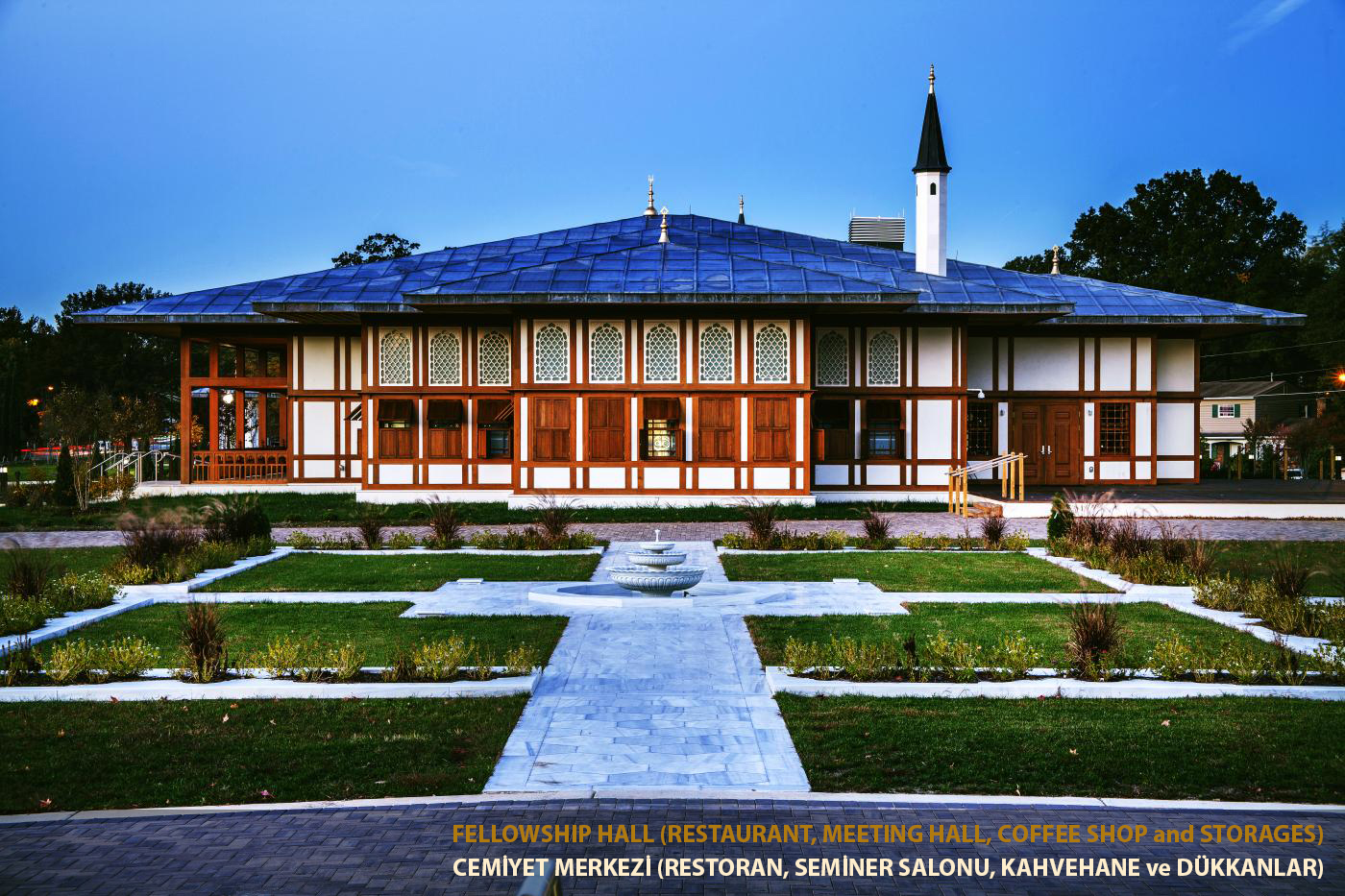
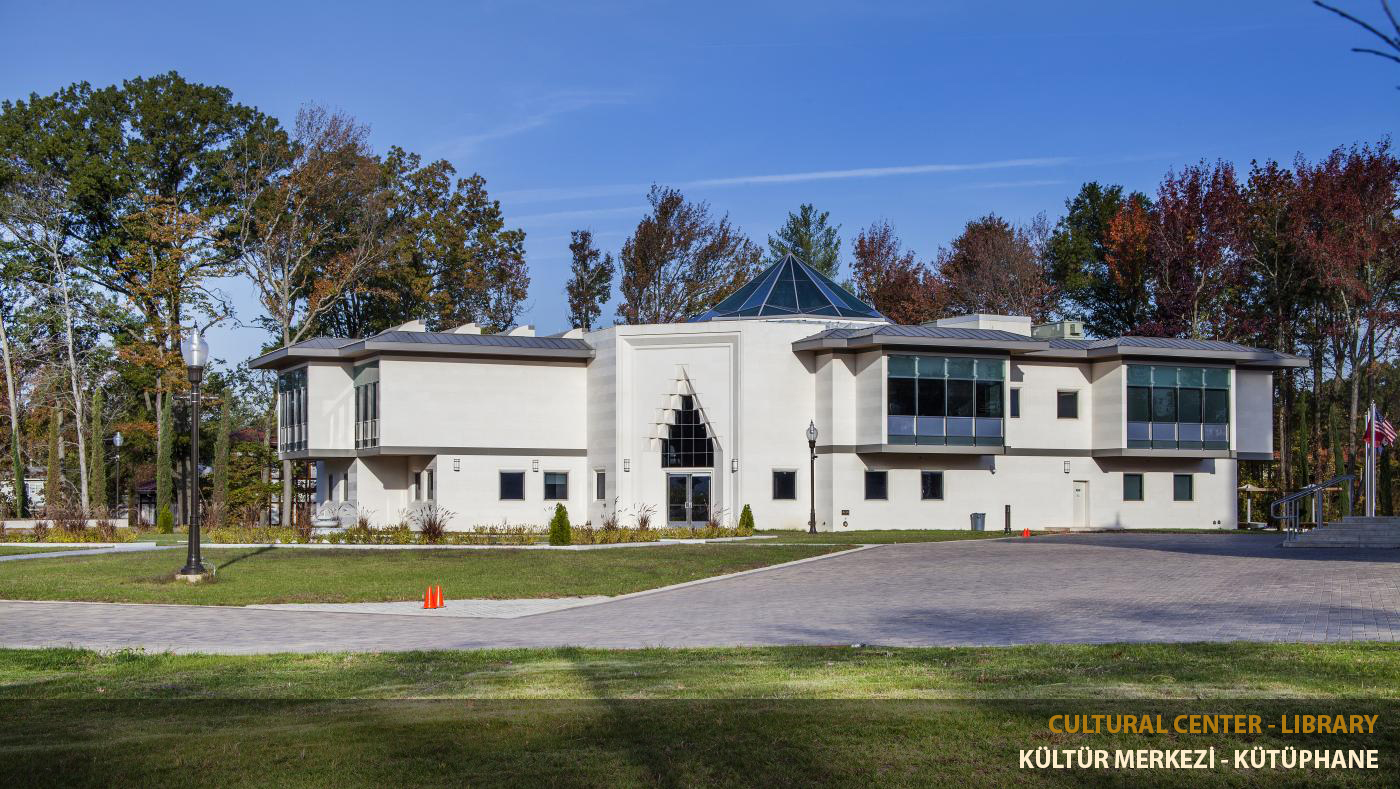
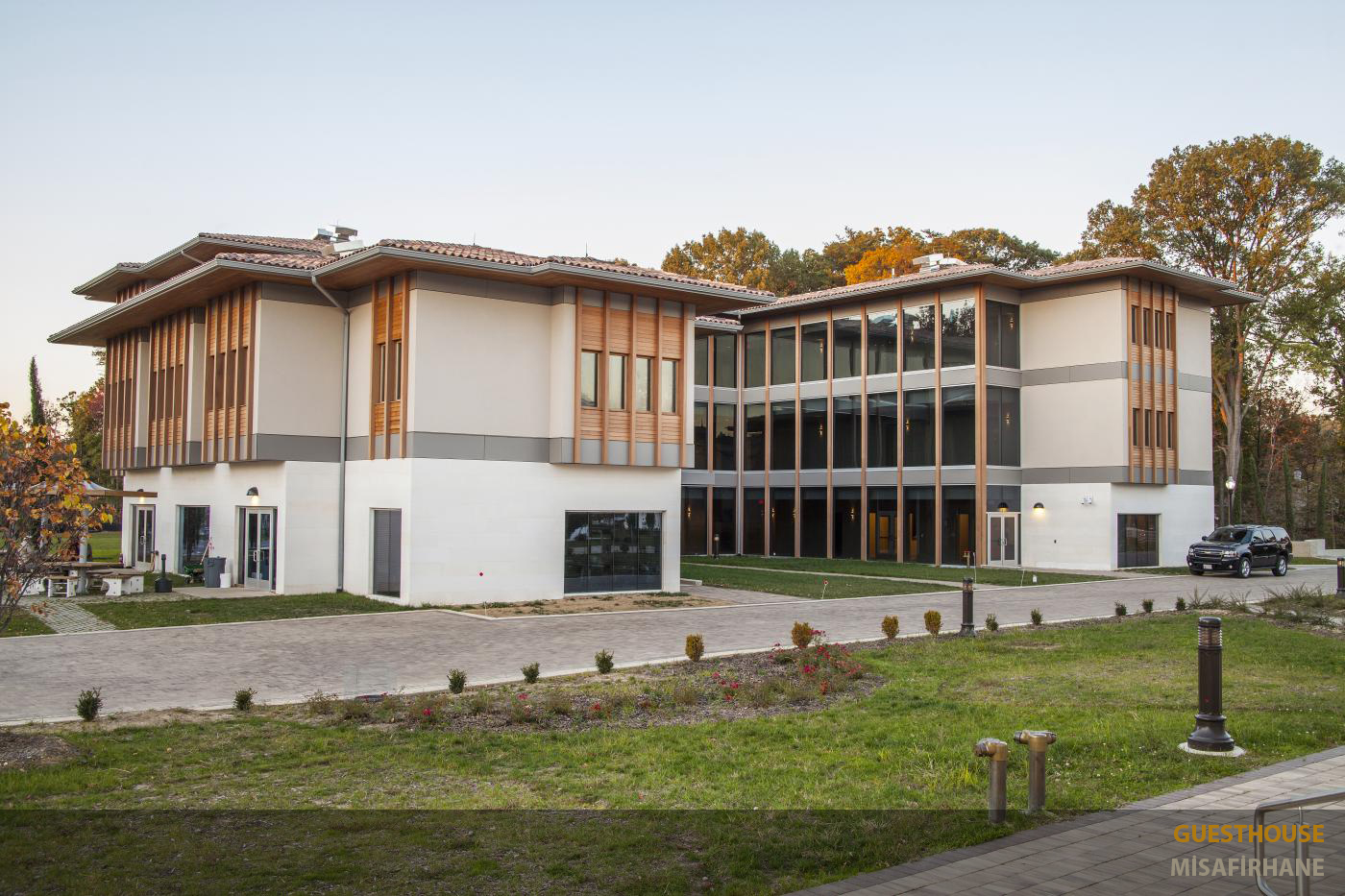
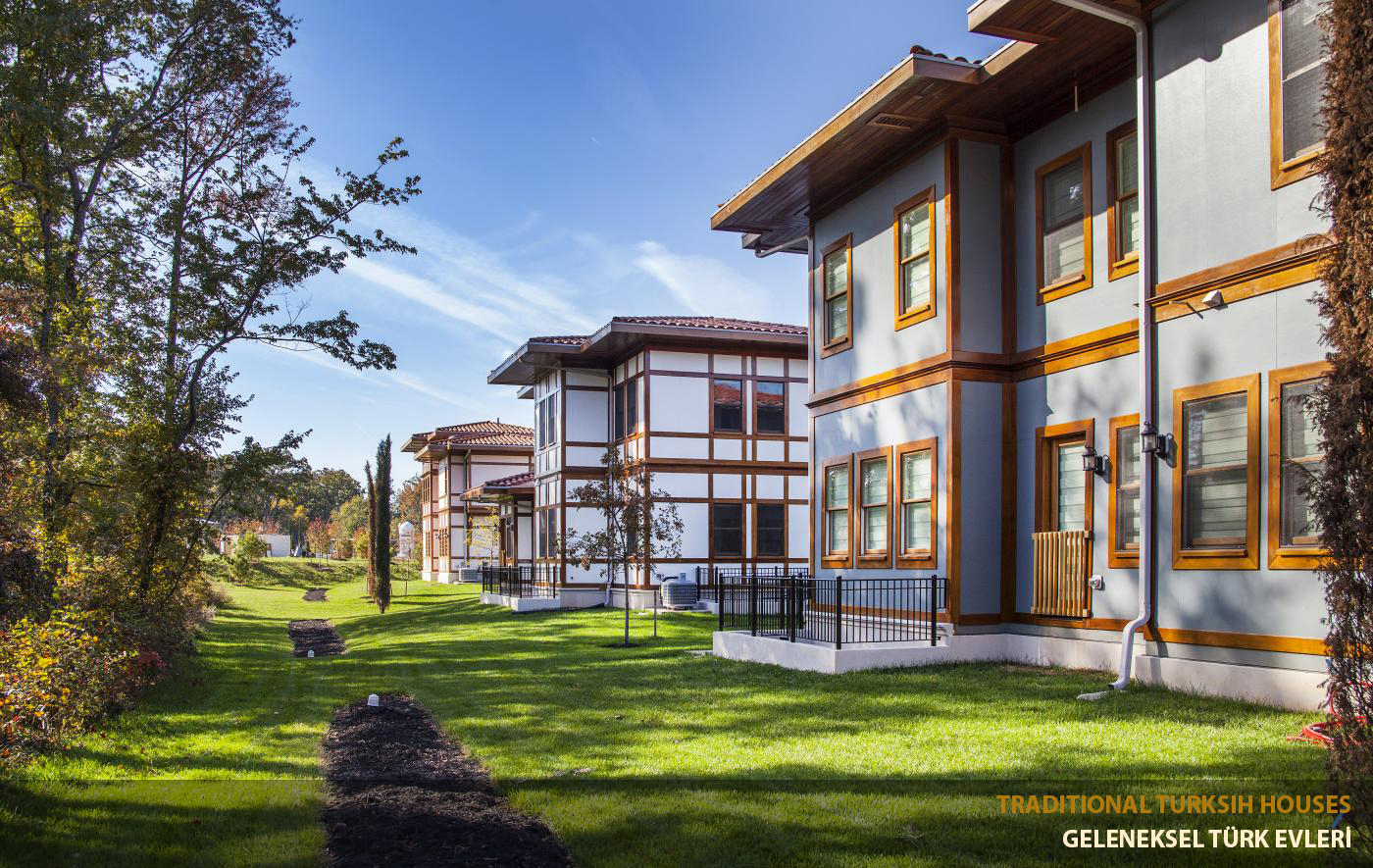
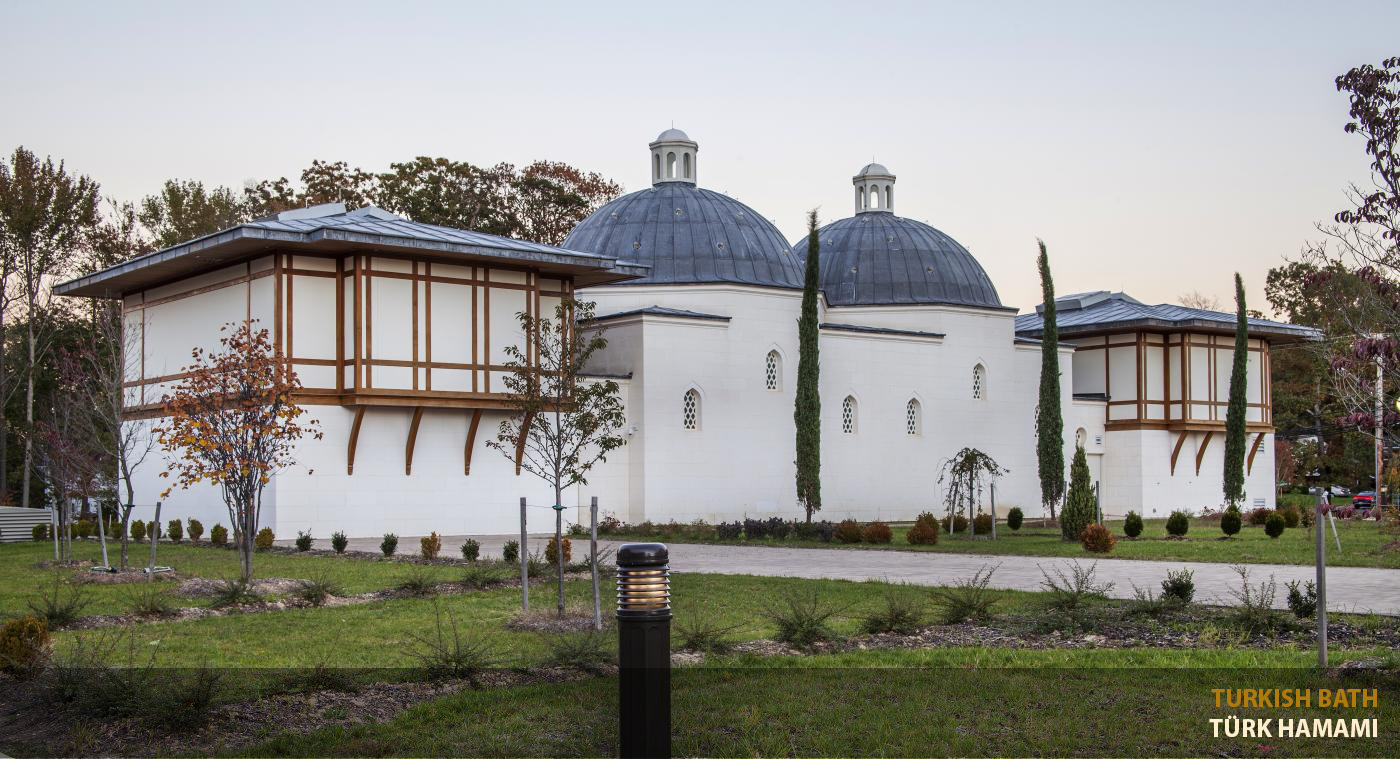
What kind of need it was becomes very clear when you go there. The center has in fact been in operation for 1 year. It is almost like the United Nations; people of every color and language flow here. Although the area is not a very densely populated settlement, it is 25 minutes by car from Washington and lies within the hinterland of this city. As you know, in America roughly a 1-hour drive can be regarded as a short distance. From the perspective of the Muslims there, this külliye is a place where they can find much of themselves in terms of identity and belonging. Because this is not merely a place where you can pray and leave. Indeed, from the very beginning, one of the most fundamental reasons for this külliye's existence was to host master's and doctoral students coming from Turkey to study at nearby universities, and thereby, first of all, to create an academic environment. The site is very close to the University of Maryland and within walking distance of NASA, and it also serves Muslims of many different nations who study and work in the area. This is a külliye planned on a 60-decare site. For example, there is the Cultural Center building, which is as important as the Mosque. The lower floor of this building contains an exhibition hall and foyer where daily activities can take place, as well as a 280-seat conference hall. The upper floor houses a research center and a library.
The mosque in the Maryland külliye reflects Mimar Sinan and the Ottoman style, while the cultural center bears Seljuk lines. Is there a particular reason for blending both the Ottoman and the Seljuk?
Seljuk architecture is a branch of Islamic Architecture that developed within the geography of Central Asia and Anatolia in connection with the other styles of Islamic Architecture. Ottoman Architecture, in turn, is a continuation of this style that emerged in Western Anatolia. The traces the cultural center bears from Seljuk Architecture are the design of the spaces around a central inner courtyard and the covering of the central space with a geometric conical glass roof. In Islamic Architecture, spatial composition and geometry are important concepts. However, Islamic Architecture contains within itself the dialectics that enable it to speak to people of every nation. These are the dialectic of man, time, space and the universe, and the dialectic formed between man and Allah (c.c.). Without touching on the reflections of these dialectics in architecture and the arts, it is very difficult for us to explain why and how these styles were reflected, and the reasons behind them.
To put it briefly, the belief in tawhid (divine unity) of the Islamic revelation gave rise to a mujarrad, that is, abstract art, which, in reflecting the spiritual realm onto the world, uses not the forms of created things but geometry and rhythms that find their reflection in the essence of matter. The Islamic arts, more than an abstract art that ennobles matter, are an understanding of art which, as reflections of celestial wisdom, relates multiplicity to unity, that is, to wahdat, by means of geometric-mathematical forms and sequences.
This understanding brought about abstraction (tajrid), condensation (taksif), synthesis (tarkib) and stylization in the Islamic arts. Just as the purification of humanity reached its maturity in the Prophet Muhammad (pbuh), so too in the civilization of the religion he brought, things were viewed through this window of purification and abstraction. For this reason, painting, theater and the novel in the Western sense never existed in the Islamic arts. Instead, there are miniature, calligraphy, illumination, the performing arts and tales. This view of things in Islamic civilization and its arts reflects the understanding that, by correctly grasping the reality of life and death, not only the welfare of humanity but also its peace and happiness are of extraordinary importance.
On the occasion of the anniversary of Mimar Sinan's death, if we were to talk a little about Sinan: have we, and indeed the world, come to know Sinan well enough? Why is no effort made to get to know him?
If we had understood Sinan correctly, we could have conveyed him correctly, but with our current level of perception this does not seem possible. Because we do not yet properly know even our own history, we are making the mistake of seeing a great man like the great Sinan as if everything began with him alone. For example, how well do we know the towering figures who came in the same era as he did? Kara Memi, Mimar Sinan's friend, brought ornamentation to such a level that every painted decoration and illumination he made is the Süleymaniye of these arts… Kanuni (Suleiman the Magnificent), who wrote poetry under the pen name Muhibbi, was, besides being a sultan, an extraordinarily powerful poet. Ahmed Karahisârî was a calligrapher who brought the art of calligraphy to its summit and strengthened it as an independent art. The great poets Fuzûlî and Taşlıcalı Yahya belong to this era; the poet Bâkî was both a kadıasker (chief military judge) and the sultan of words... The statesmanship of Sokullu Mehmed Pasha and Lala Mustafa Pasha in history is known to everyone. It is the chain of tradition that carries all these personalities to the following generations. There is a structure handed down from generation to generation within a chain of tradition. Had there not been the architects of an entire Islamic tradition, there would have been no Sinan either. Only when we stop looking at the world from a Europe-centered perspective can we truly begin to know him and make him known. Because this is a matter of identity and culture.
If Mimar Sinan had been an architect in Europe rather than an Ottoman architect, would the impact of his architectural and engineering genius be seen all over the world?
Of course it would, because the euro-centric view requires this. But then Sinan would no longer be Ottoman. Sinan has now begun to be examined at the academic level through various approaches. However, when we look at these approaches, as they themselves admit, they take an approach of completely detaching religion from architecture and evaluating every architecture and the religious understanding of that period within the context of its own era. They claim that the architectural heritage produced by Islam cannot be interpreted through a single reading. Islamic architecture is of course not a static structure; it may change according to eras and geographies. But at the level of civilization, we can see the dialectic of man, time, space and the universe, and the relationship between man and Allah on which this outlook and relationship depend, within the art and architecture that spread from Spain to India. We call this dialectic's way of transforming material stylization. Let us ask a single question: why do geometric patterns, and muqarnas, which are their form raised into the third dimension, exist in their most comprehensive form only in Islamic Architecture? Without answering this question, we can neither properly understand Sinan nor explain him to the world. We have no chance of explaining this architecture without understanding exactly what it is. Since the dialectic we are speaking of could not exist in a European architect either, and since architecture in Europe lost this depth long ago, such a thing is in any case not possible.
Was Sinan only an architect, or should his engineering be discussed as much as his architecture? If it is not discussed, why not?
Sinan was both an engineer and an architect. To put it more accurately, before the industrial revolution there was no distinction between architect and engineer. One spoke only of the architect; engineering is a branch that separated from architecture. His engineering is not discussed because the perception and understanding of today's engineering are very far from the engineering practice of that time. The engineering of that day dealt with a building together with all its elements; for example, it regarded mosques as shells. How can we explain the fact that these buildings, made of stone and brick, are still standing after 500-550 years despite so many violent earthquakes? In my opinion, the minarets of this era, when their height is considered in proportion to the area they occupy at the base, are marvels of engineering and statics, and in the technical sense the world's first skyscrapers. Do we, I wonder, now have engineers who could build these buildings without using computers? Before coming to Sinan, we must first answer these questions. I do not think we can yet understand Sinan at the technical level, because in universities Ottoman Architecture is treated not as an organization but as a subject of art history. Yet, with today's technology, do we have the means and the likelihood of completing a building like the Selimiye today within its construction period of 3 years? First of all, you would have to mobilize thousands of craftsmen and tons of material from every corner of the empire with tremendous logistics and bring them together. You cannot call the master craftsmen on a mobile phone, and there are no companies supplying materials or firms carrying out the work.
What does the Sivas Divriği Great Mosque mean for Sinan? Could Sinan have been inspired by this work? When we look at earlier works, which influence do we see most in his works?
You can place alongside the Divriği Great Mosque the buildings of the entire Islamic architectural tradition; of course they meant a great deal to Sinan. Can you understand Sinan only within his own historical context? Had there not been the architects of an entire Islamic tradition, for example, had there not been Muslihiddin, the architect of the Üç Şerefeli Mosque in Edirne; Hayreddin and Yakup Şah bin Sultan Şah, the architects of the Bayezid II Mosque in Istanbul; and Acem Ali, the architect of the Yavuz Sultan Selim Mosque, could Mimar Sinan be spoken of? Certainly not. Mimar Sinan, too, as the towering figure of his own era, is a link in this chain of tradition. While he was in the Janissary corps, traveling from city to city on the campaigns to the east and west, he had the opportunity to see not only the existing Ottoman and Seljuk architecture but also ancient Islamic, ancient Greek, Roman and Persian architecture. Seen from this angle, it becomes clear that an entire tradition shaped him. For example, the first spiral minaret with three intertwined staircases and three paths is in the Üç Şerefeli Mosque in Edirne. Yet everyone assumes the minarets of the Selimiye Mosque to be the first in this field. Whereas the Üç Şerefeli predates Sinan by about 130 years… And the two-path minaret of the El-Rızk Mosque in Hasankeyf predates the Üç Şerefeli by 25 years.
This was also discussed when the Mimar Sinan Mosque opened: isn't it now time to stop copying Mimar Sinan in mosque building and to produce original works?
The most common of the negative criticisms written about the Mimar Sinan Mosque is that the building is an exact imitation of Ottoman architecture. This issue calls for a detailed look. Because, as a nation whose ties with tradition have been severed, we assume that everything belonging to the past descended from the sky in a basket, and we perceive it all as ready-made objects we have found. We regard looking at them in detail and trying to understand them as a great burden. For this reason, we see everything that resembles the old as a copy of the old. Whereas what is a copy of the old is merely the shape formed in our minds through our untrained eyes, not the thing itself and what is authentic.
An eye that has not previously given thought to this matter, looking at one of the minarets of the Süleymaniye, will at first glance perceive the muqarnas beneath all three balconies (şerefe) as identical. But on closer attention, it will notice that all three are of completely different geometries and separate designs. Yet the matter does not end there either; if one looks carefully again, the balustrades of the three balconies are also each different from one another! Each was designed differently, taking into account its height and position. This is characteristic of Islamic architecture.
As seen in this example, the Ataşehir Mimar Sinan Mosque, too, will be perceived, with a careless and indifferent glance, as a copy of Ottoman mosques. First of all, we need to set this view aside together with our prejudices and look with the intention of understanding the matter.
The Ataşehir Mimar Sinan Mosque is a building designed in the style of Ottoman classical-period architecture. The technical name for this endeavor is 'stylistic re-composition'. That is, while this mosque fully conforms to Ottoman Classical Period architecture in its composition, details and so on, it is a completely original building that is not an imitation of any other historic structure.
The six-pier spatial composition, which began to be tried before the classical period and which Mimar Sinan himself tried in various mosques, had never before been applied in a building of this scale. Among the great mosques, the Şehzade, the Süleymaniye and the New Mosque rest on four piers, and the Selimiye on eight. With the great volume achieved by trying, for the first time at this scale, this hexagonal composition, which gives a larger span between supports than the square and the octagon covering the same area, the Ataşehir Mimar Sinan Mosque has been added to the tradition as a brand-new, gleaming link.
What we do is the reinterpretation of an architectural heritage that is on the verge of disappearing and whose style and mode of production have been forgotten; in the way we usually put it, the reproduction of tradition. Because we have lost this experience that we ought to possess, in the restorations we carry out historic buildings are unfortunately stripped of their original identity and condemned to a new and foreign guise.
Our building tradition encompasses arts such as stonework, kündekârî (interlocking wooden joinery), tile-making, calligraphy, kalemkârlık (hand-painted decoration), lead-working and revzen (stained-glass window) making, whose names most of our colleagues today do not even know. No sensible person would object that the works of the last artists and craftsmen who duly practice these arts, which are a cultural heritage, should be kept alive, even if only as samples, simply so that this chain of tradition is not broken. The Western world is full of examples of such traditions being preserved in their original form. Since we have hardly any master craftsmen or architects left who properly know and practice these arts and attend to their subtleties, it also cannot be denied that these noble and ancient accumulations and values face the danger of vanishing, degenerating and losing their dignity in the caricature-like mosque constructions in our neighborhoods. In this respect, the Ataşehir Mimar Sinan Mosque has undertaken a mission to form a final link that was missing in the development of classical mosque architecture, and also to ensure the transmission to the present of the correct details and high-quality examples of these traditional arts.
It is our most natural right to expect sensible people to be able to distinguish an architectural and construction activity carried out on the basis of accumulated knowledge, professional sensitivity and meticulousness from buildings that are unqualified, undignified, shapeless and soulless.
Until the day we begin to question our housing, shopping malls and office buildings, which continue to rise uncontrollably day by day all over the country, including Ataşehir where the mosque is located, as well as our approach to the concept of the city, our notion of dwelling that does not belong to us, our attire, our clothing and our relationship with objects, we need to prevent the values that the Ataşehir Mimar Sinan Mosque strives -even if only as a sample- to embody from being forgotten, and to pass them on to tomorrow.
As far as I know, you also designed the Ataşehir Mimar Sinan Mosque and the Theology Mosque in Altunizade. While the Mimar Sinan Mosque bears the traces of Mimar Sinan, the Theology Mosque is an entirely different project. As an architect, which styles do you most enjoy using?
The Theology Mosque is “not modern”; it is stylized and simplified authentic Islamic Architecture. As you too have noticed, the first criterion taken into account in its design is the question of style. The reason the question of style is so important is the question of the poetics of space, which in Classical Ottoman Architecture has still been neither surpassed nor understood. If there is a beauty that a person, whether an architect or not, can feel in a Classical mosque regardless of its size, and everyone is aware that this was achieved in 16th-century Ottoman Architecture, then it must be recreated with new materials, in a style that uses the same dialectic of human feeling without breaking away from the old. The poetics of space has now become a concept felt only when one goes to a classical mosque. Because the tradition was broken, it has never until now been a subject of today's mosque design activities. Owing to the absence of this concept, the attempts made so far have been designed either as poor repetitions of the old, or with an approach that meets the need for prayer in a manner that considers only the visible need, rejecting the universe-man dialectic found at the essence of Islam. For this reason, the Theology Mosque was designed as a reaction to the "classical mosque versus modern mosque" dilemma, which is fundamentally misapplied: bound to tradition, but with the aim of creating a new outlook and style with new materials. Every new undertaking made without truly becoming one with classical architecture and without establishing a direct bond with tradition will be soulless and flawed.